Inspire
I find that inspirational work is never far away; be that an unexpected piece of street art as you turn a corner, an abandoned building or place, a gallery or exhibition. Many photographers and artists have inspired and influenced me over the years for many different reasons... subject matter, style, perspective, composition, attitude, technique, equipment, approach, atmosphere etc. This page shows a few of them along with a short biography, some of my favourite images and links to find out more.
It's not an exhaustive list and the artists aren't in any particular order. The images are the copyright of the original artists (their heir, estates etc.) and are snippets of the originals for illustrative purposes only, please visit the links provided to find out more. The icon for this section is inspired by a Herb Ritts image you'll see later.
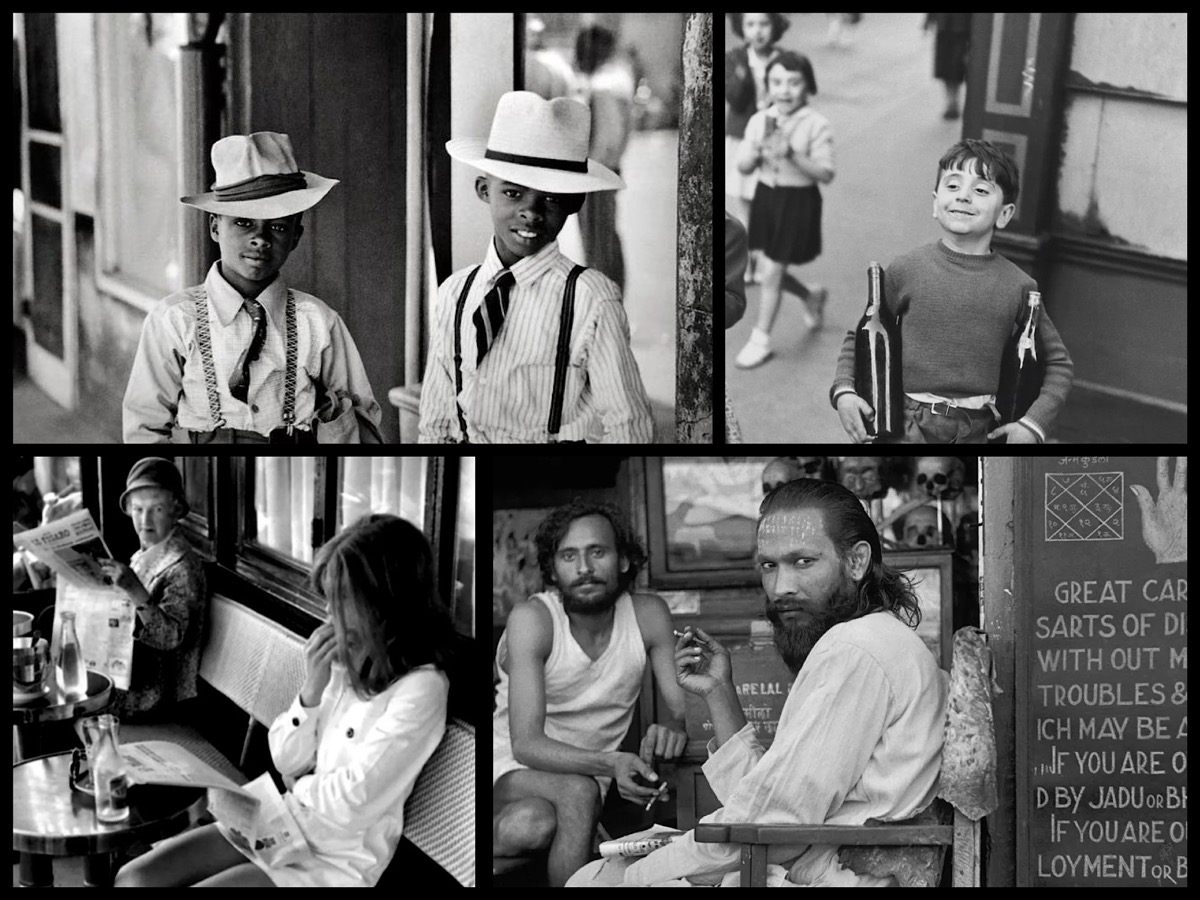
Henri Cartier-Bresson
1908-2004
Cartier-Bresson developed a strong fascination with painting early on, and particularly with Surrealism. In 1932, after spending a year in the Ivory Coast, he discovered the Leica, and began a life-long passion for photography.
In 1947, with Robert Capa, George Rodger, David ‘Chim’ Seymour and William Vandivert, he founded Magnum Photos. After three years he had spent travelling in the East, in 1952, he returned to Europe, where he published his first book, Images à la Sauvette (published in English as The Decisive Moment).

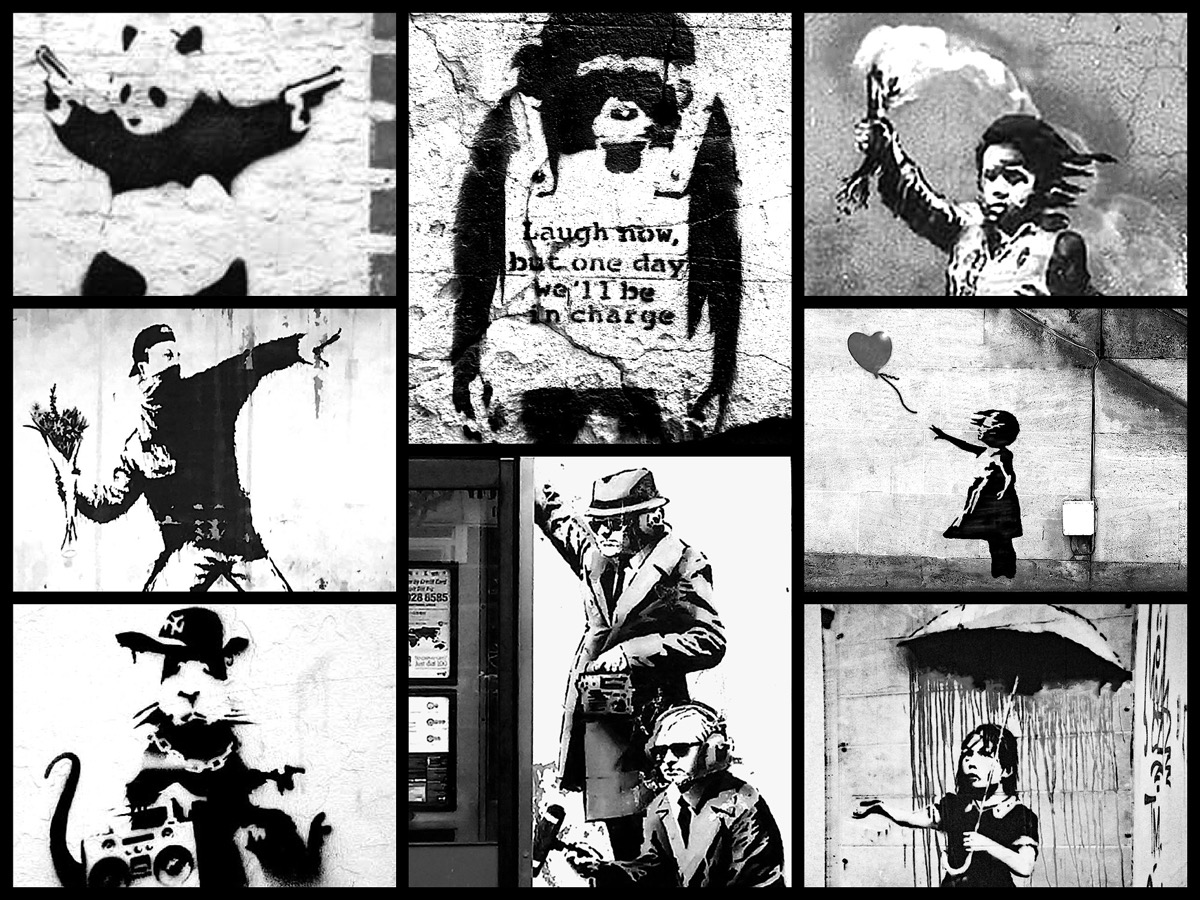
Banksy
Born 1974?
Contemporary British street artist and activist who, despite his international fame, has maintained an anonymous identity. Aimed as a form of cultural criticism, the artist often targets established social and political agendas with his witty illustrations produced with stencils and spray paint in cities such as New Orleans, New York, and Paris.
Although details of the artist’s life are largely unknown, it is thought that Banksy was born in Bristol, United Kingdom, c. 1974, starting his career as a graffiti artist in the city.
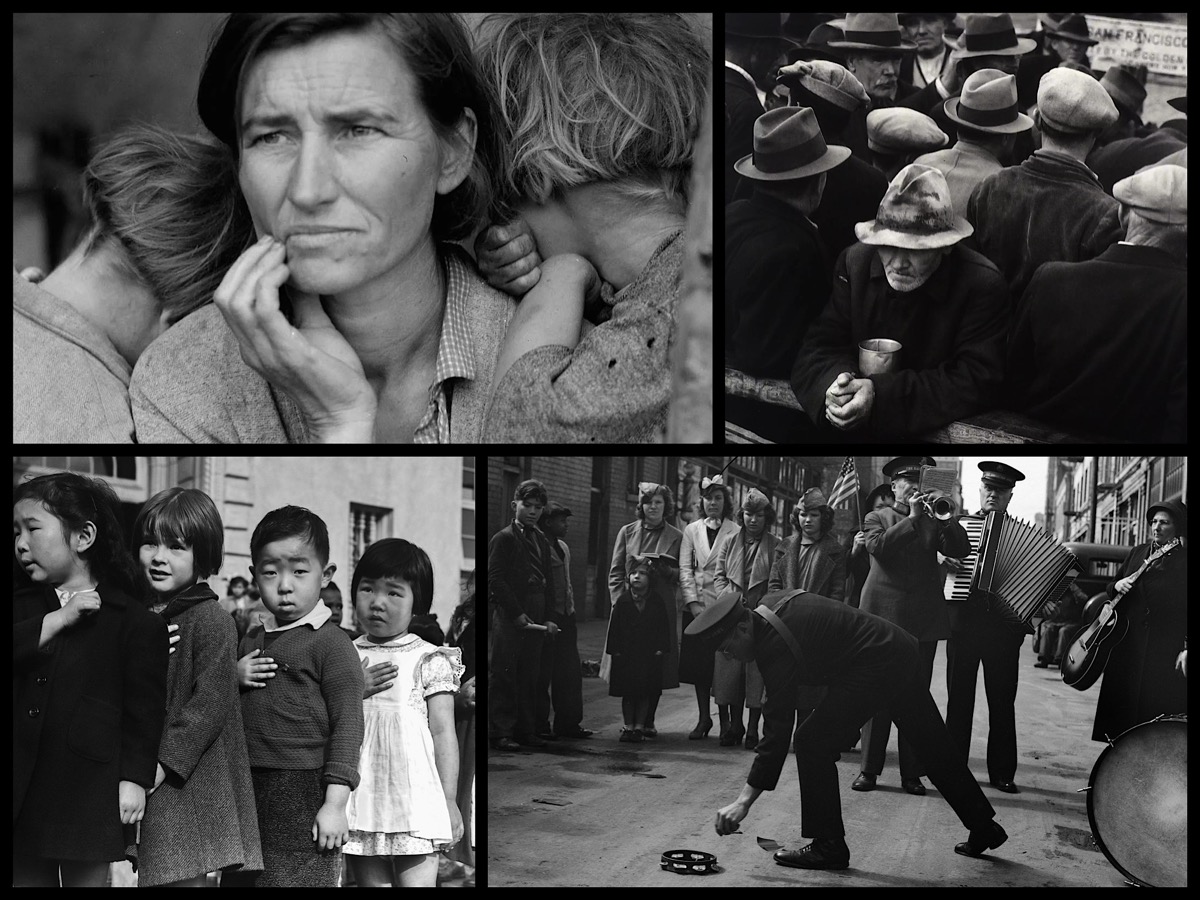
Dorothea Lange
1895-1965
American documentary photographer whose portraits of displaced farmers during the Great Depression greatly influenced later documentary and journalistic photography.
During the Great Depression, Lange began to photograph the unemployed men who wandered the streets of San Francisco. Pictures such as White Angel Breadline (1932), showing the desperate condition of these men, were publicly exhibited and received immediate recognition both from the public and from other photographers.
Lange’s first exhibition was held in 1934, and thereafter her reputation as a skilled documentary photographer was firmly established.
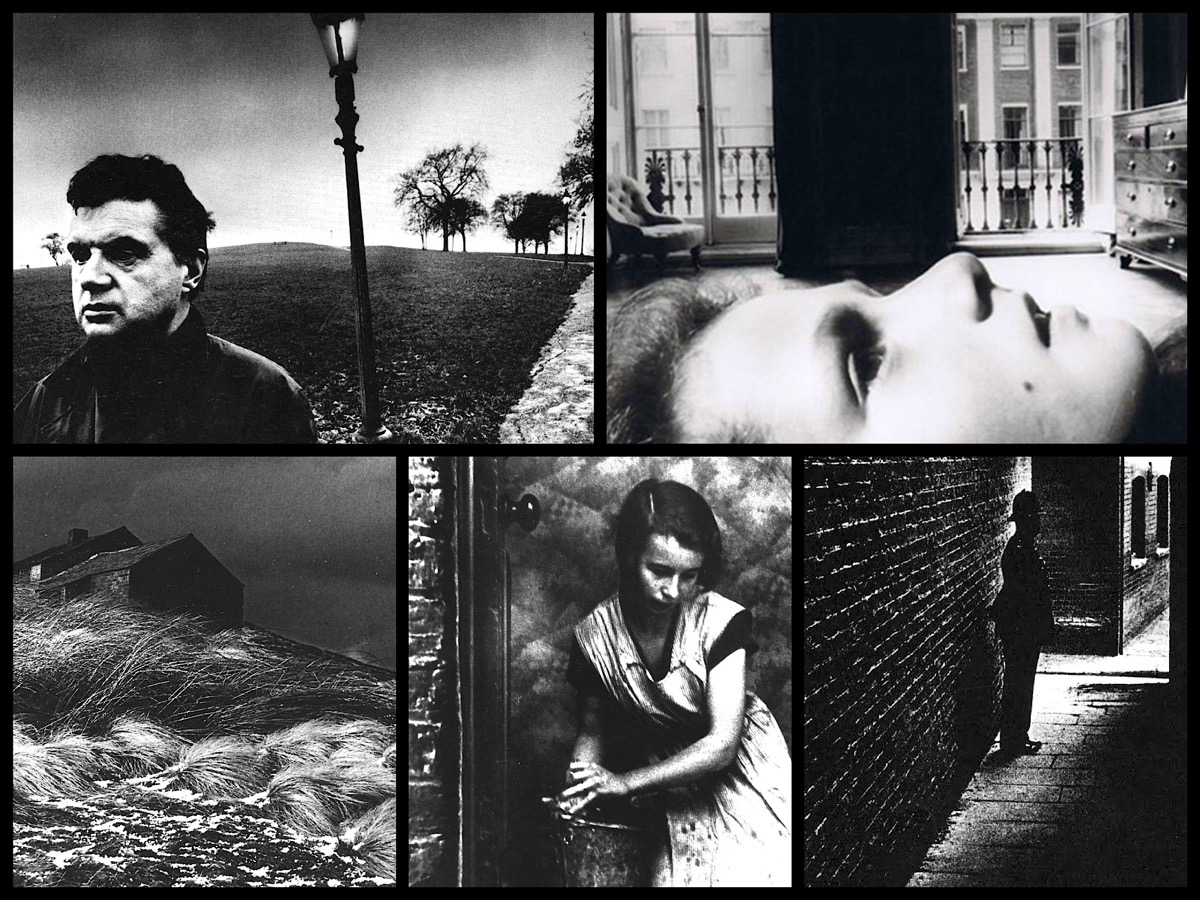
Bill Brandt
1904-1983
Brandt began photographing in Vienna, Austria from 1927 to 1928. From 1929 to 1930 Brandt studied under the surrealist artist Man Ray in Paris, and became influenced by surrealism. From 1931 to 1939 Brandt set up as a freelance photographer in London, England.
He specialized in social documentary photography, and often collaborated with the press. From 1939 to 1945 Brandt turned to photojournalism. Brandt photographed air-raid shelters and Londoners during war-time from 1940 to 1945 for the British Home Office. He also took documentary photographs for the National Buildings Record, London, England. British photographer, born in Germany, raised in Switzerland.
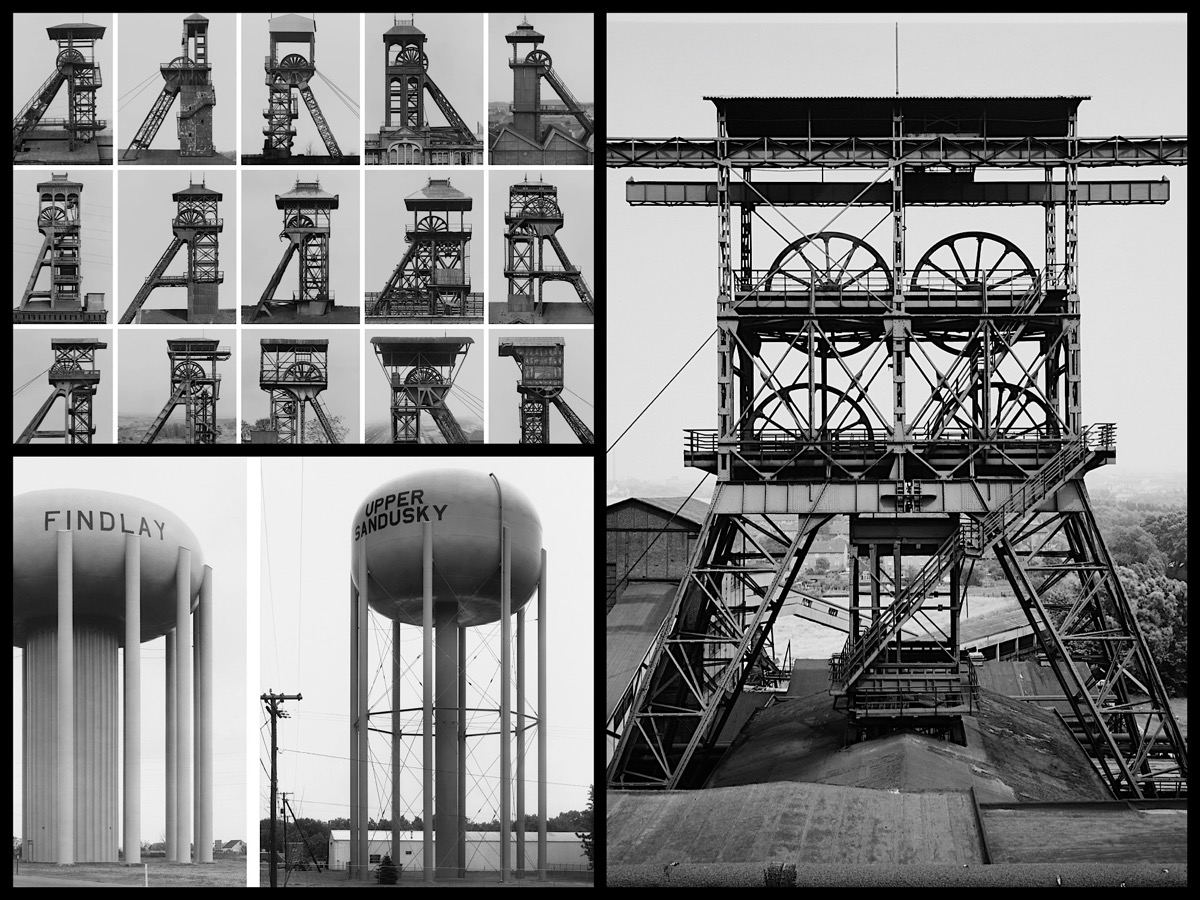
Hilla & Bernd Becher
1934-2015 & 1931-2007
Hilla Becher was a German artist born in 1934 in Siegen, Germany. She was one half of a photography duo with her husband Bernd Becher who changed the course of late twentieth-century photography. Working as a rare artist couple, they focused on a single subject: the disappearing industrial architecture of Western Europe and North America that fueled the modern era.
They won the Erasmus Prize in 2002 and Hasselblad Award in 2004 for their work and roles as photography professors at the art academy Kunstakademie Düsseldorf.
They began collaborating together in 1959 after meeting at the Kunstakademie Düsseldorf in 1957. Bernd originally studied painting and then typography, whereas Hilla had trained as a commercial photographer. After two years collaborating together, they married.
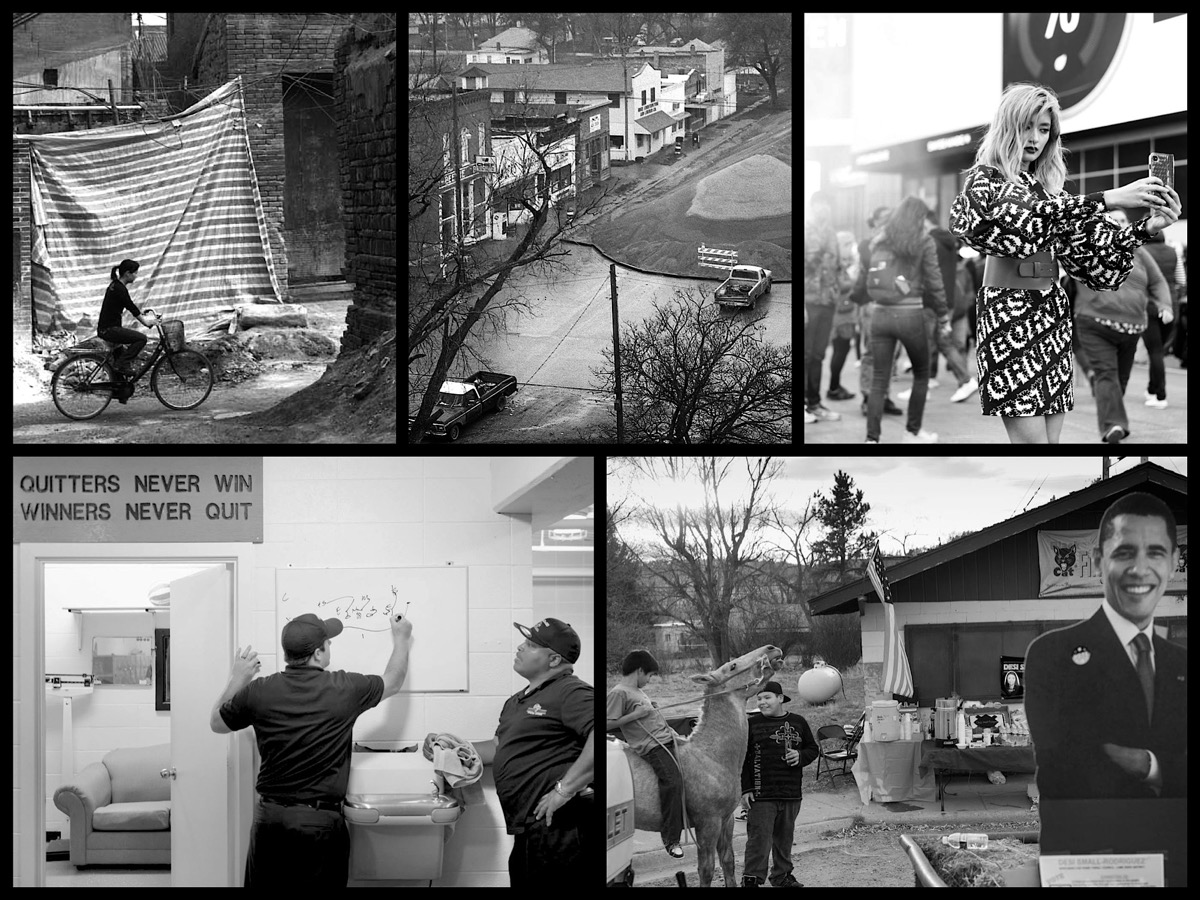
Kenneth Jarecke
Born 1963
Jarecke is an American photojournalist, author, editor and war correspondent. He has worked in more than 80 countries and has been featured in LIFE magazine, National Geographic, Sports Illustrated, and others. He is notable for taking the famous photograph of a burnt Iraqi soldier that was published in The Observer, March 10, 1991 when most editors refused to publish it.
Jarecke moved to New York as a teen and later met David Burnett and Robert Pledge of Contact Press Images, joining a handful of photographers that included Annie Liebovitz. He was assigned to photograph Oliver North at the start of the Iran-Contra hearings. LIFE magazine commissioned other work as a result.
Jarecke was a White House photographer in the Ronald Reagan years. He covered Tiananmen Square, the Gulf War and the Olympic Games.
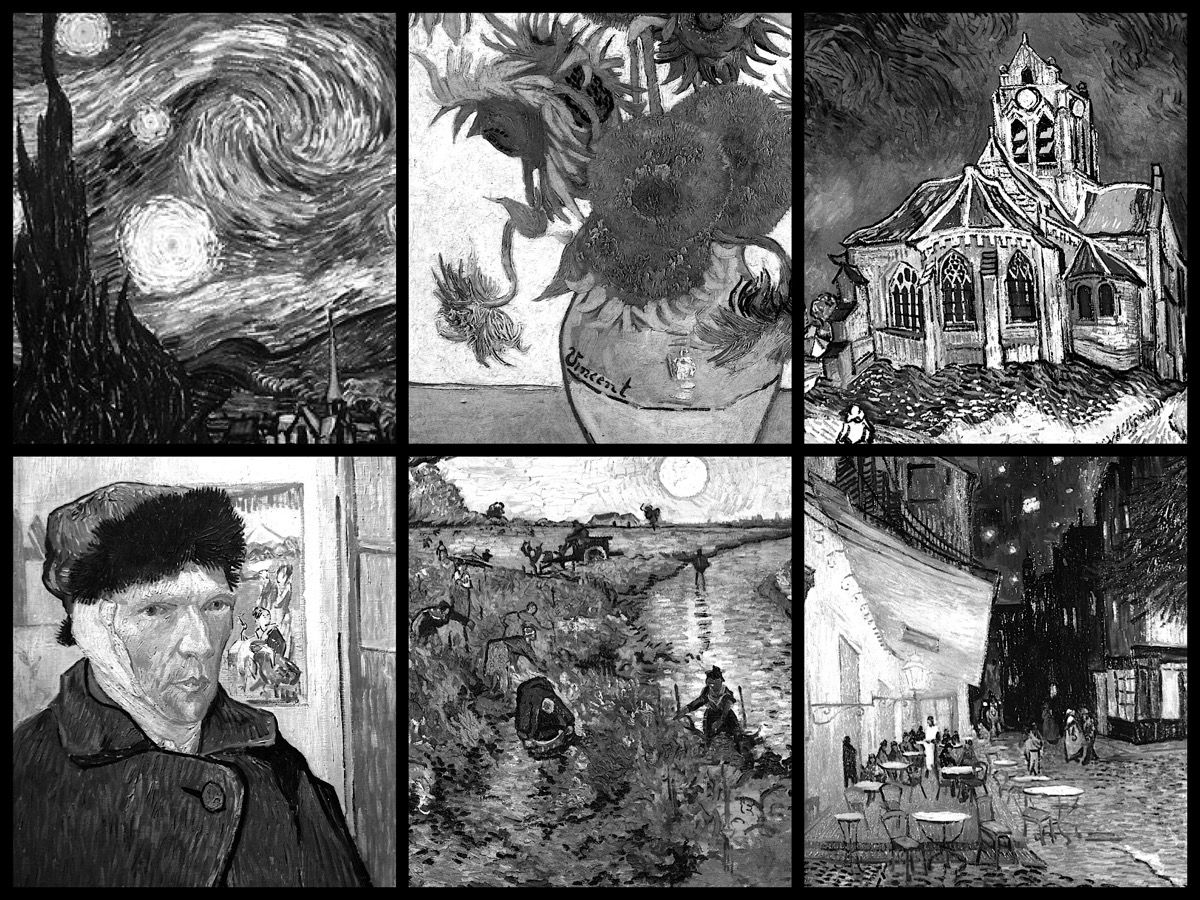
Vincent Van Gogh
1853-1890
Van Gogh is today one of the most popular of the post-impressionist painters, although he was not widely appreciated during his lifetime. The traumas of his life, documented in his letters, have tended to dominate and distort modern perceptions of his art.
He was born in Holland and didn't start painting until 1883. In 1885-6 he attended the academy in Antwerp where he was impressed by Japanese prints and by the work of Rubens. On his return to Paris in 1886 he met artists such as Degas, Gauguin and Seurat, and as a result lightened the colours he used.
In 1888 he settled in Arles in Provence, where he was visited by Gauguin and painted his now famous series of 'Sunflowers'.
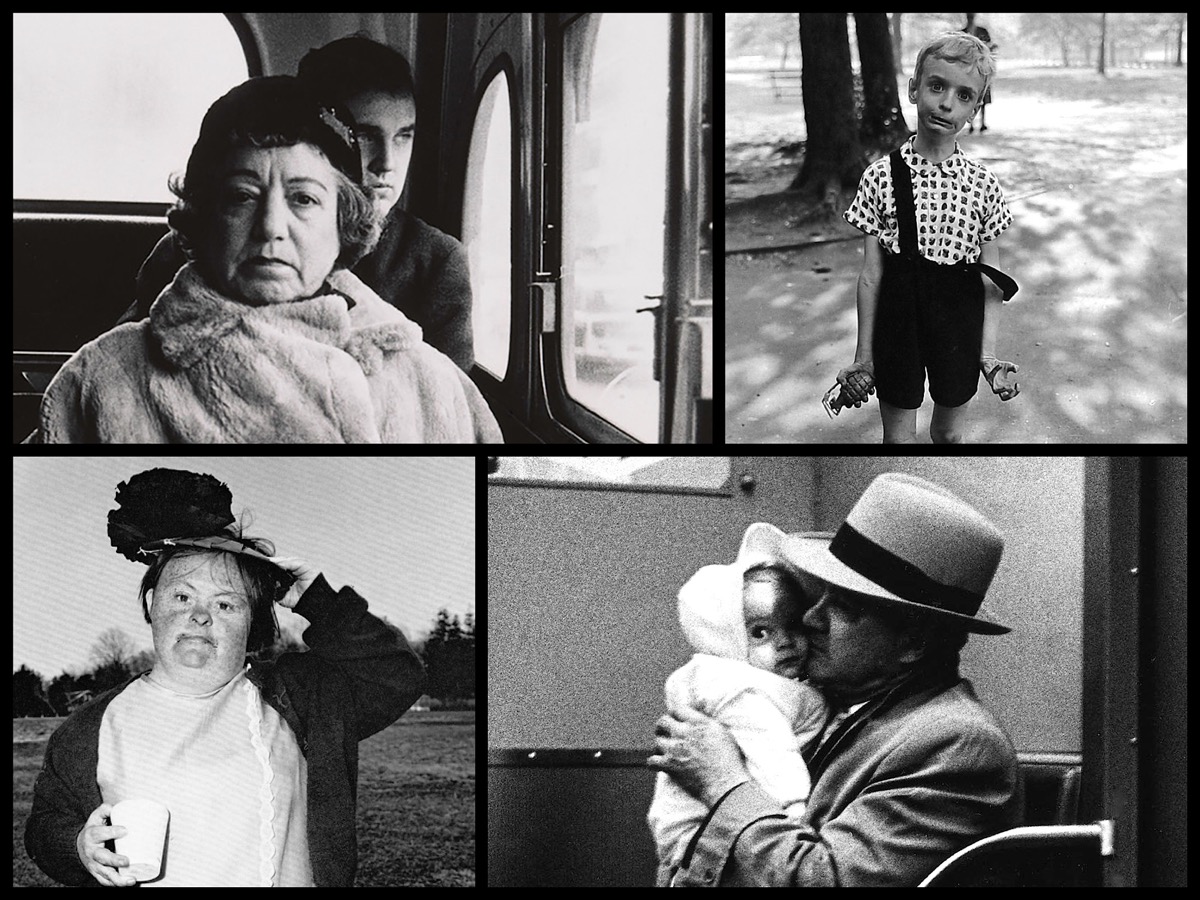
Diane Arbus
1923-1971
American photographer who photographed a wide range of subjects including strippers, carnival performers, nudists, people with dwarfism, children, mothers, couples, elderly people, and middle-class families. She photographed her subjects in familiar settings: their homes, on the street, in the workplace, in the park. She is noted for expanding notions of acceptable subject matter and by befriending, not objectifying her subjects, she was able to capture a rare psychological intensity.
In 1972, a year after her suicide, Arbus became the first photographer to be included in the Venice Biennale where her photographs were "the overwhelming sensation of the American Pavilion" and "extremely powerful and very strange".
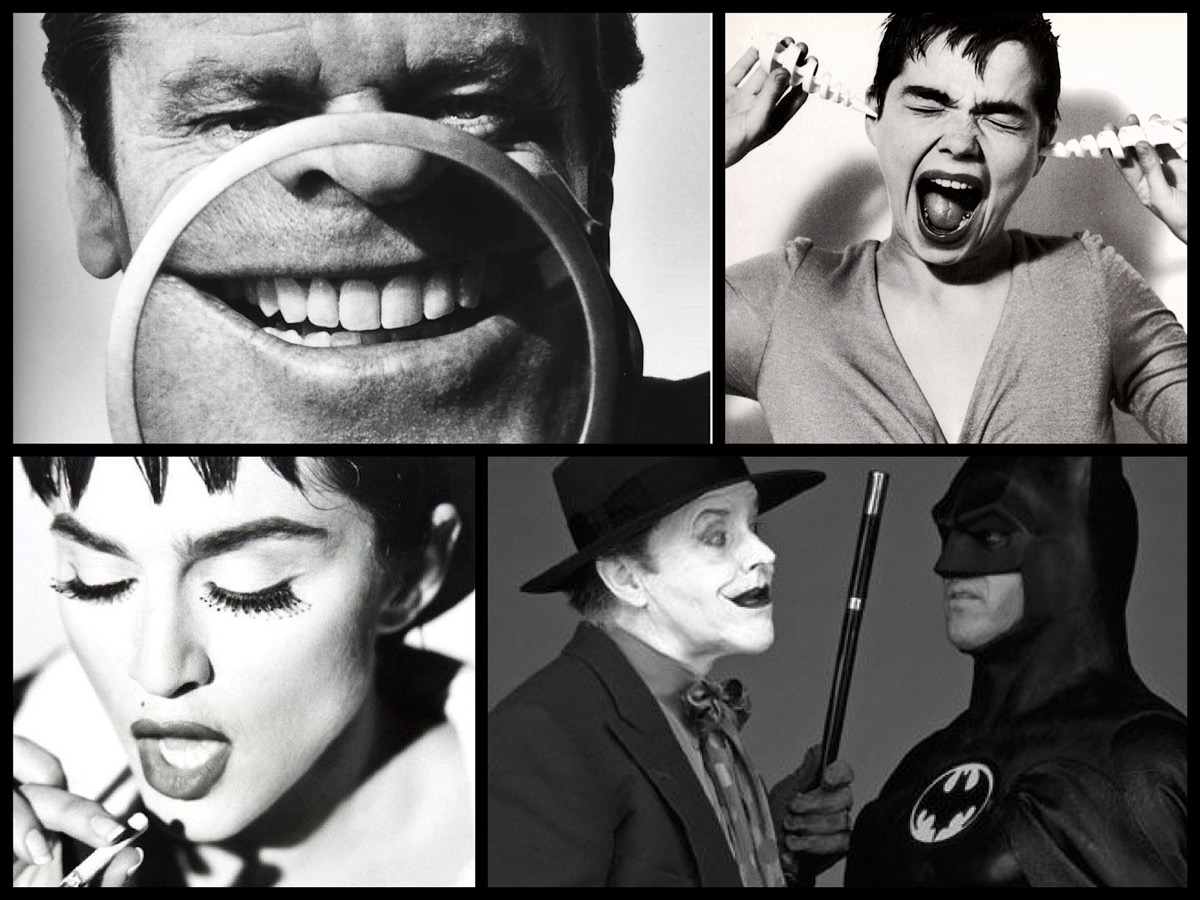
Herb Ritts
1952-2002
Ritts began his photographic career in the late 70s and gained a reputation as a master of art and commercial photography. Beginning in 1988 he directed numerous influential and award-winning music videos and commercials. His fine art photography has been the subject of exhibitions worldwide, with works residing in many significant public and private collections.
In his life and work, Ritts was drawn to clean lines and strong forms. This graphic simplicity allowed his images to be read and felt instantaneously. His work often challenged conventional notions of gender or race. Social history and fantasy were both captured and created by his memorable photographs of noted individuals in film, fashion, music, politics, and society.
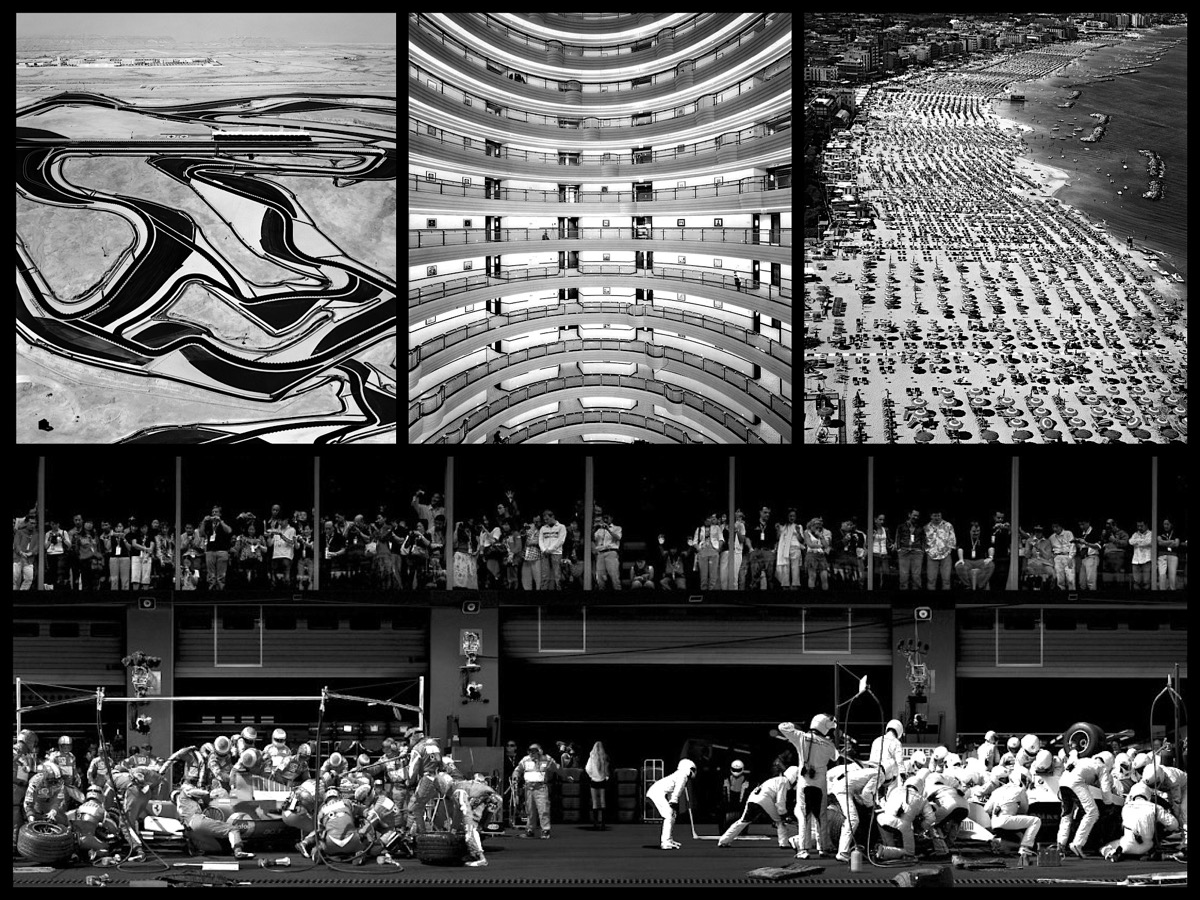
Andreas Gursky
Born 1955
German photographer known for his large format architecture and landscape colour photographs, often using a high point of view. His works reach some of the highest prices in the art market among living photographers. His photograph Rhein II was sold for $4,338,500 on 8 November 2011.
Gursky shares a studio with Laurenz Berges, Thomas Ruff and Axel Hütte on the Hansaallee, in Düsseldorf. The building, a former electricity station, was transformed into an artists studio and living quarters, in 2001, by architects Herzog & de Meuron, of Tate Modern fame. In 2010–11, the architects worked again on the building, designing a gallery in the basement.
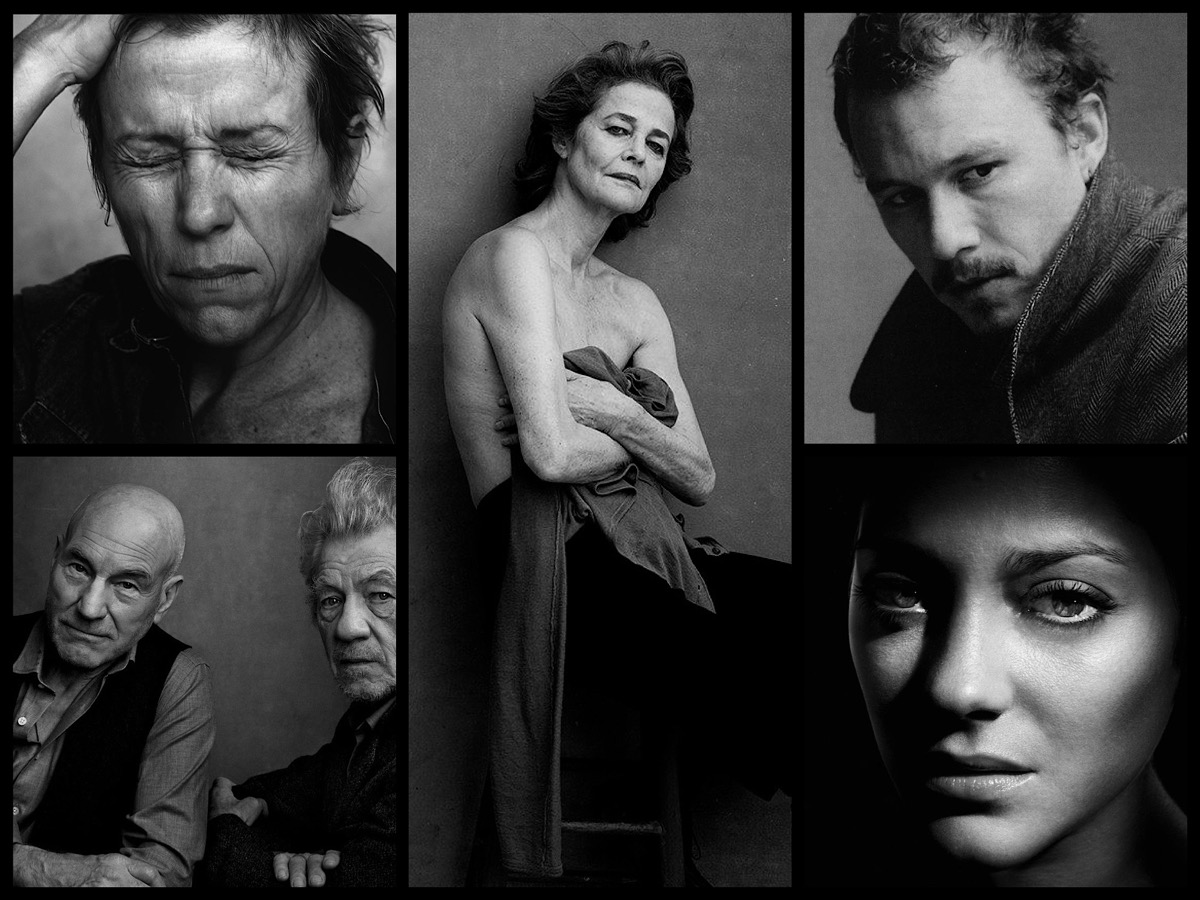
Annie Liebovitz
Born 1949
Leibovitz is an American photographer renowned for her dramatic, quirky, and iconic portraits of a great variety of celebrities. Her signature style is crisp and well-lighted.
In 1967 when Leibovitz enrolled in the San Francisco Art Institute, intending to become a painter. After taking a night class in photography, however, she quickly became engrossed in that medium. In 1970, while still a student, she was given her first commercial assignment for Rolling Stone magazine: to photograph John Lennon. Three years later Leibovitz became the publication’s chief photographer.
In 1991 Leibovitz had her first museum exhibition; she became the first woman and second living photographer to show at the National Portrait Gallery in Washington, D.C.
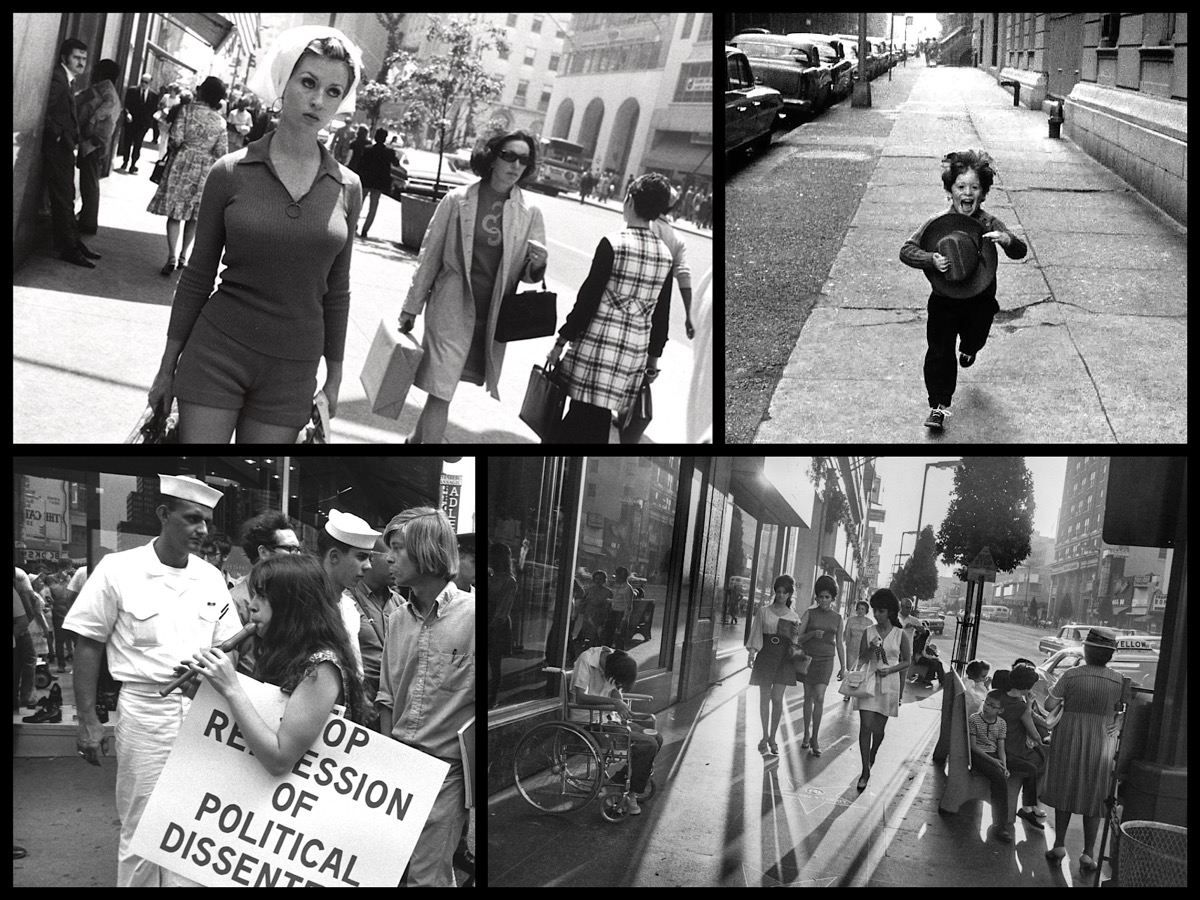
Garry Winogrand
1928-1984
Winogrand was an American street photographer, known for his portrayal of U.S. life and its social issues, in the mid-20th century. Photography curator, historian, and critic John Szarkowski called Winogrand the central photographer of his generation. He received three Guggenheim Fellowships to work on personal projects, a fellowship from the National Endowment for the Arts, and published four books during his lifetime.
He was one of three photographers featured in the influential New Documents exhibition at Museum of Modern Art in New York in 1967 and had solo exhibitions there in 1969, 1977, and 1988. He supported himself by working as a freelance photojournalist and advertising photographer in the 1950s and 1960s, and taught photography in the 1970s.